Congress - District 11
The race to succeed Democratic titan Nancy Pelosi in Congress was arguably one of the drivers of voter engagement in this otherwise low-turnout June election.
June vs. November Turnout
June elections are historically lower voter turnout elections, skewing older, more homeowner and more conservative. In this case, the special elections in Supervisoral Districts 2 and 4 (both tending to lean more conservative) also had a significant impact on the Congressional race. (As did the redistricting of most of Supervisoral District 11 out of the Congressional District, which had the second-to-lowest voter turnout of any of the 11 supervisoral districts at 41%.)
SF Identity & Saikat
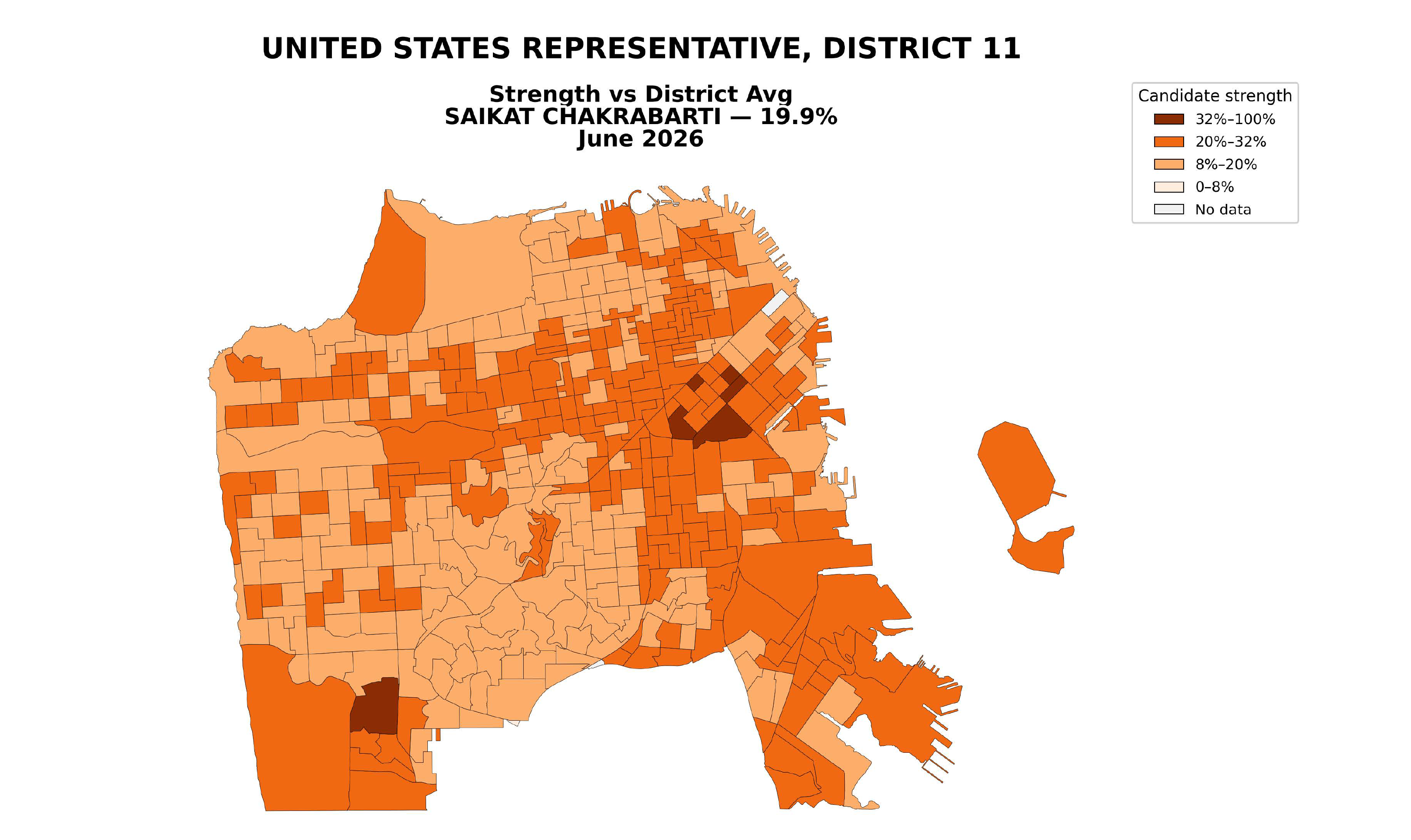
While born-and-raised San Franciscans have become more rare, there’s a general feeling of local exceptionalism and boosterism that has played out in different ways politically. (If you’ve ever been told that you’re officially “a local” after 7 years, you’ll know what we mean.) Simply put, San Franciscans want their political candidates to have some proven connection to the City – (save for maybe District 6, which continues to be more transient and have more newly registered voters). Despite Saikat spending $8.8M of his own money (averaging about $211/per vote as of the last pre-Election Day reporting period) and despite having a well-articulated policy platform and a young and energized campaign team, voters did not see his proven bona fides or his rooted connection to San Francisco versus his own personal ambitions on the national stage. (Additionally, given that the average voter age in San Francisco is now over 50 yo, the significant investment in building up a strong social media presence did not translate into votes.) He did show strengths in areas with a high concentration of new voters who had registered to vote within the last five years, like SF State, and portions of Mission Bay and Downtown.
Scott vs. Affordability
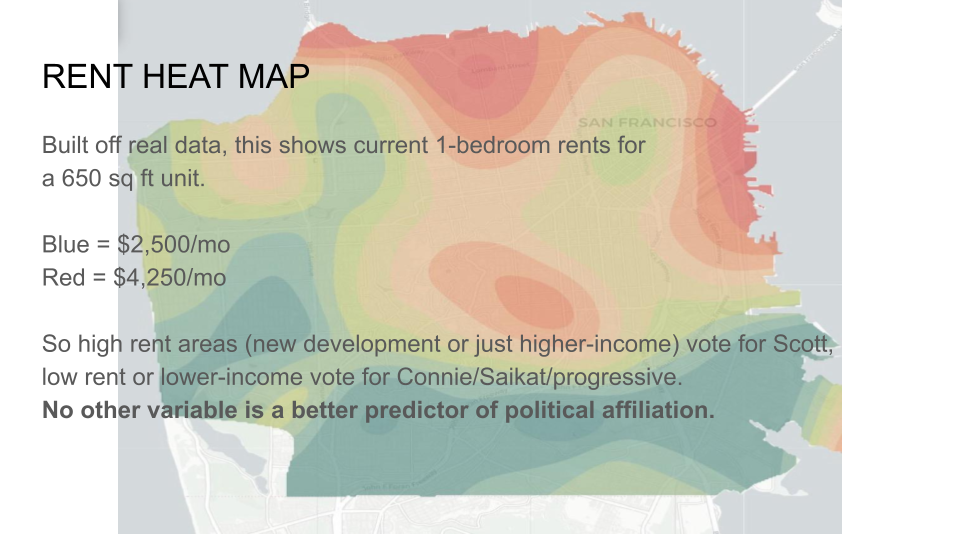
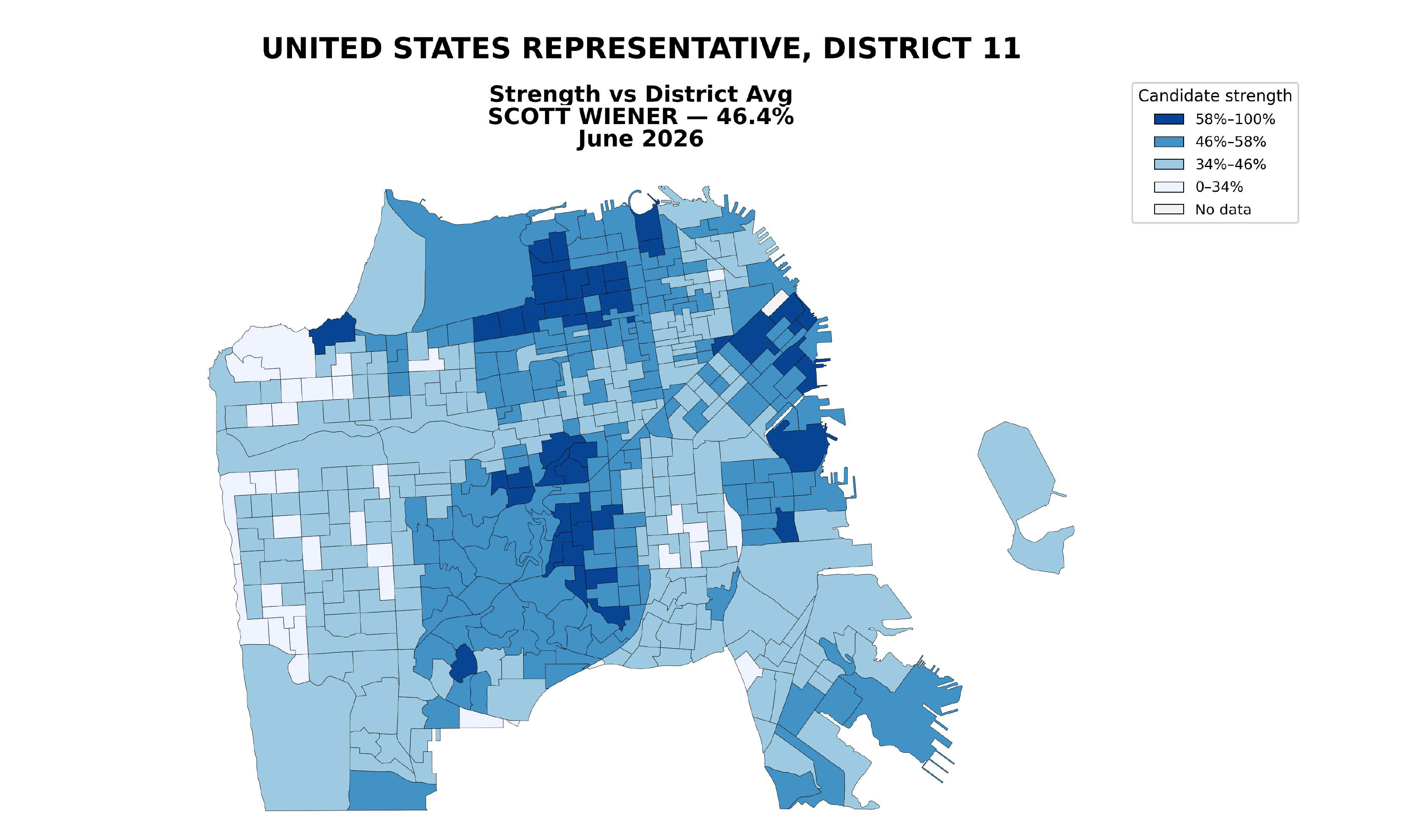
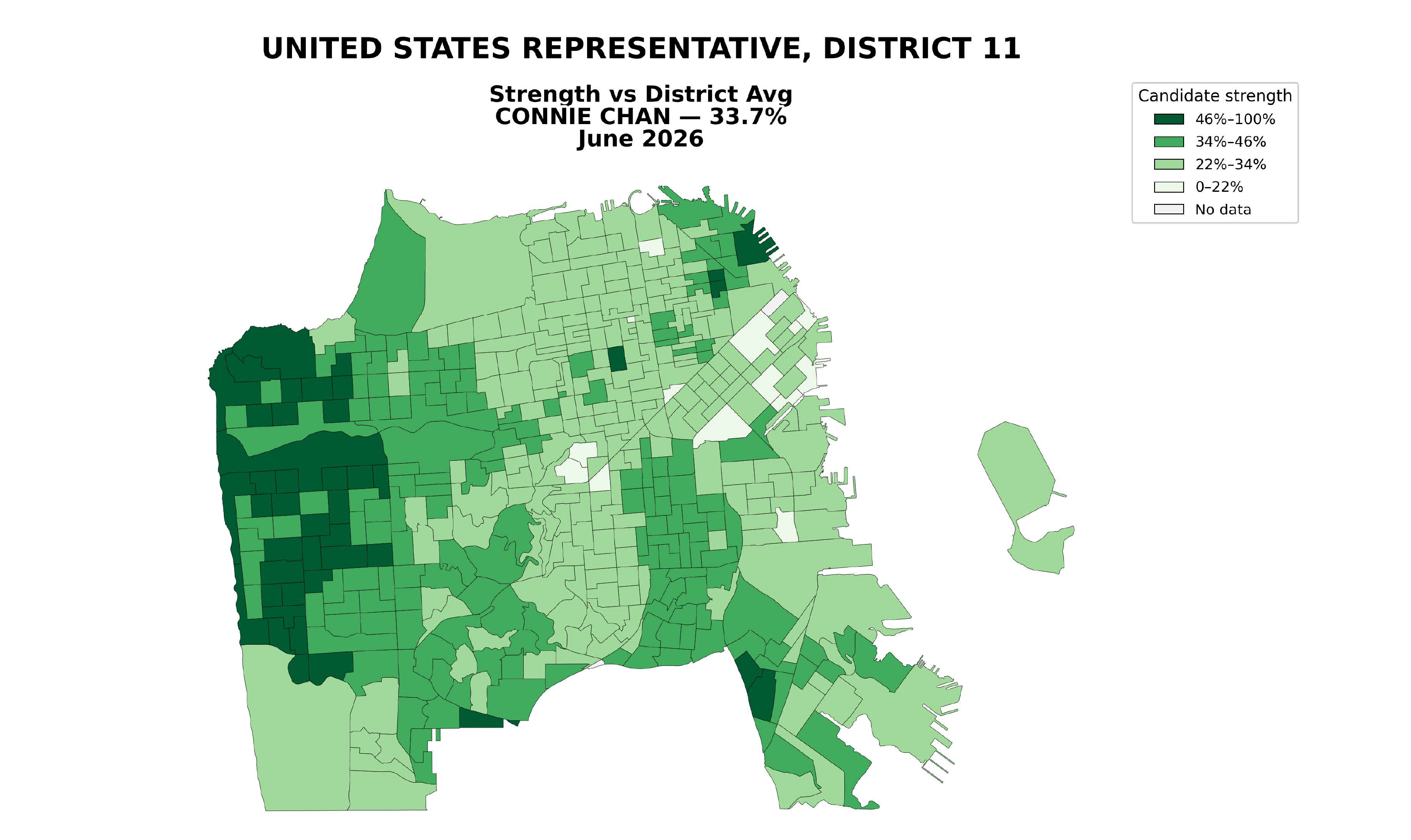
Every poll in the last two years has put affordability at the top of the list of priorities for San Francisco voters, with rents, cost of living expenses and evictions skyrocketing. Not surprisingly, congressional candidate Scott Wiener’s voters tended to be wealthier and whiter, while Connie Chan’s voters skewed the opposite direction. If we overlay the Connie Chan strengths map with the most recent rental heat map, we see a lot of overlap. High rent areas (ie, new development residents or just higher-incomen renters and high-value homeowners) voted for Scott, while lower rent and rent-controlled residents or lower income residents voted for Connie or Saikat (ie, more progressive.). No other variable we’ve seen is a better predictor of political affiliation.
Expanding Connie’s Base for November
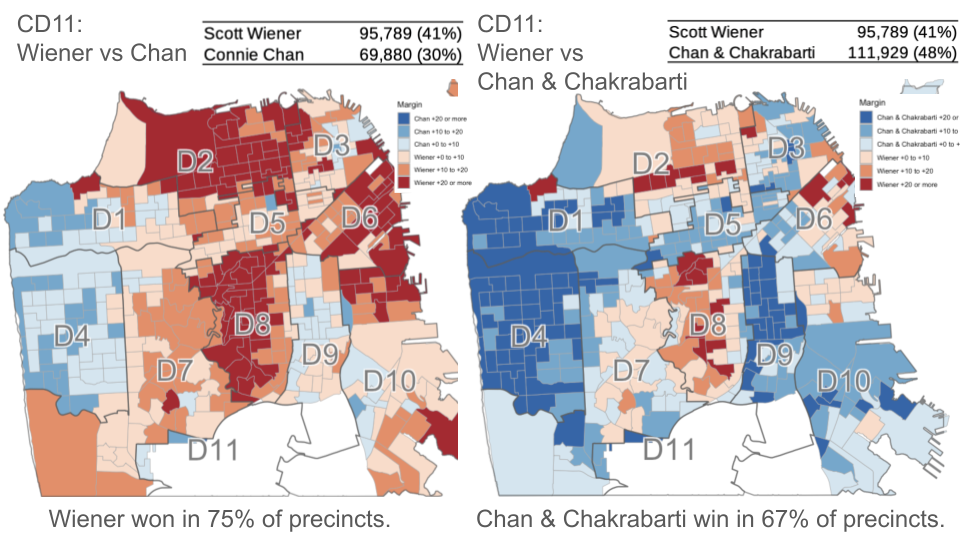
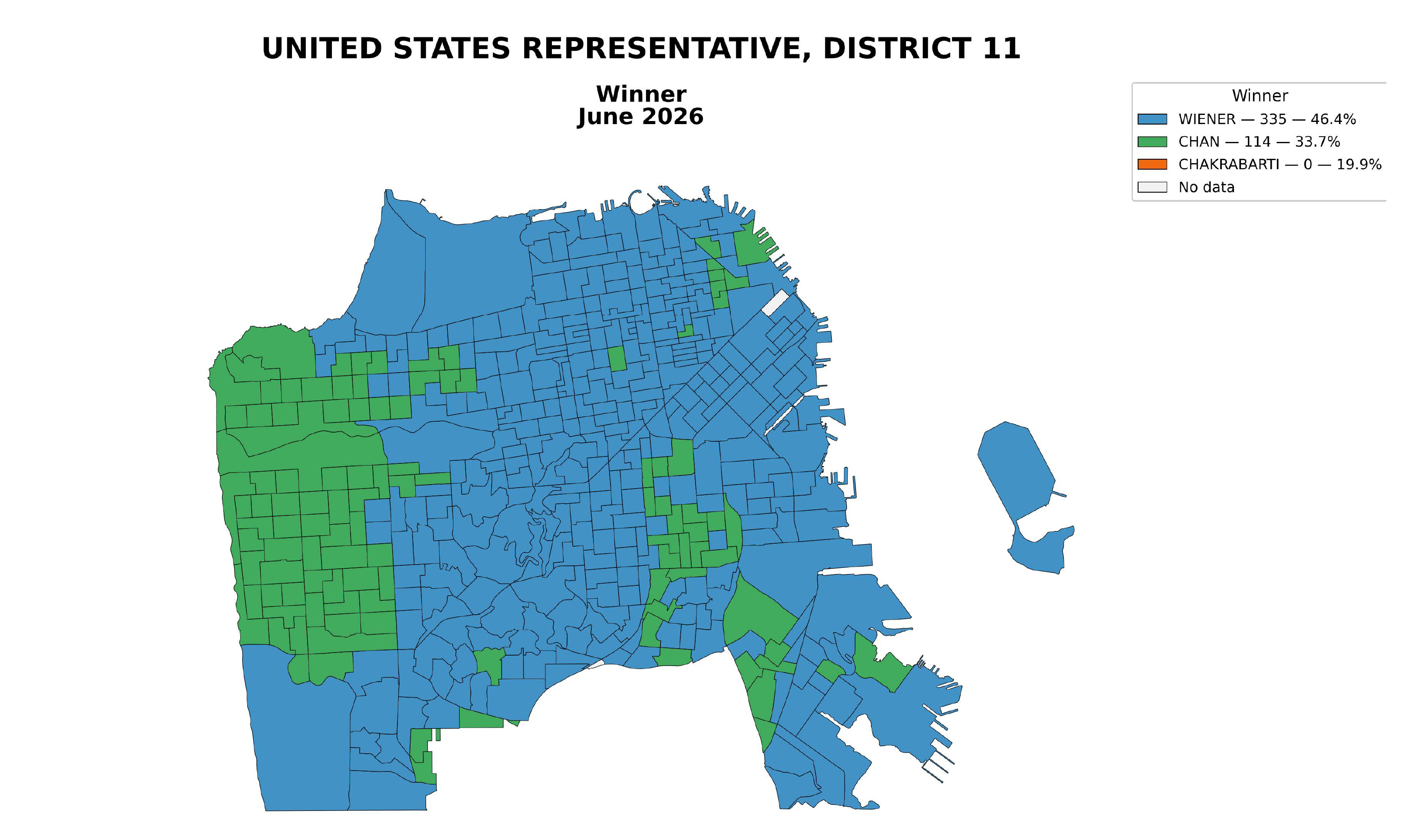
Meanwhile, despite being massively outspent, congressional candidate Connie Chan was propelled to a second place ranking with the triple help of 1) a strong Chinese voter showing, especially in the Sunset, Richmond and Chinatown; 2) strong Westside support in the Richmond and Sunset, where local control over land use issues has driven voter sentiment, as exemplified by the fight over the Great Highway and the Mayor’s citywide upzoning; and 3) a Pelosi endorsement bump right as early voting was starting. Labor can also be thanked for their investment that fueled a critical multilingual independent expenditure on Connie’s behalf.
To win in November, Connie Chan will need to significantly expand her progressive base by articulating a clear populist vision around delivering affordability for all San Franciscans – and then ensuring those voters show up, including young, currently disengaged voters, and other ethnic groups.
It remains to be seen if Saikat’s tech worker base will translate to Connie, even with his public endorsement and financial support. But a focus on turning out Jackie Fielder voters in District 9, as well as speaking to voters feeling the housing crunch in central neighborhoods where rents have skyrocketed 43% recently, will be critical to Connie’s success. In addition, Connie should not be afraid of liberal areas like District 8 – despite Scott’s long history representing those neighborhoods, they’ve only become more unaffordable under his policies.
The maps also reveal some areas that Connie Chan shouldn’t concede, based on where existing support could be expanded. An expanded focus on Chinese votes in Portola and Visitacion Valley/Bayview could yield more votes with a robust field campaign, as well as focusing less on winning precincts as much as winning total votes. For example, while Connie won Chinatown’s four core precincts and lost Castro’s core precinct overall, her total vote count in that losing Castro precinct actually exceeded the amount of winning Chinatown votes.
Because it’s the total amount of votes that matter, there is room for Connie’s campaign to focus on shaving off votes from her opposition, including LGBTQ core areas – versus winning or losing precincts. She can get Saikat votes necessary to win if she expands her platform to speak to the issues that those voters clearly care about.