Proposition D: Overpaid CEO Tax
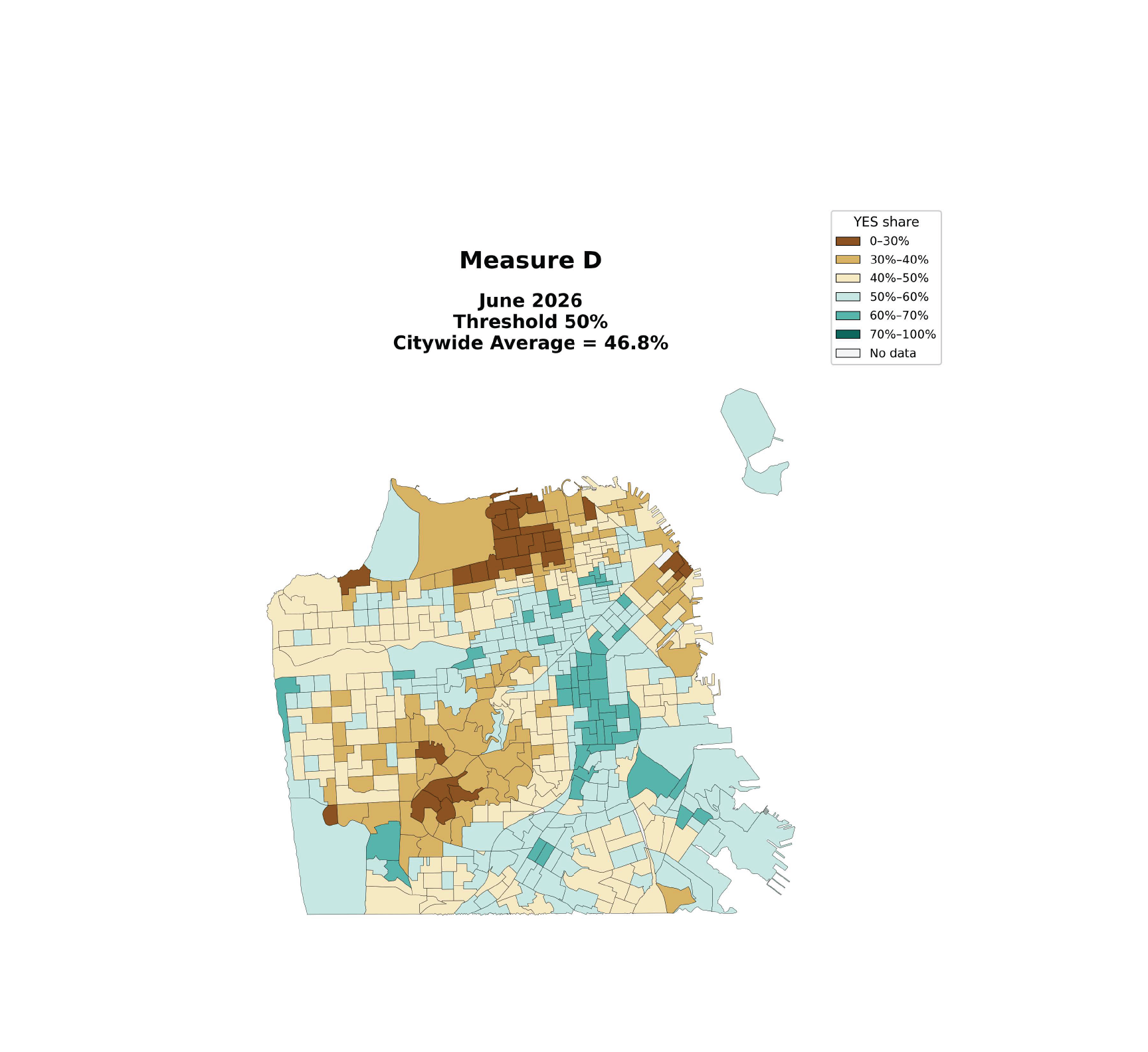
PROPEL supported Proposition D, and you can read our ballot breakdown endorsement here. Unfortunately, as discussed already, the voter turnout skewed more conservative and anti-revenue measure. While this fact was a reasoned argument for delaying the measure to a November general election, labor unions were clear that addressing the looming budget deficit was an urgent need that couldn’t wait until a more favorable election cycle.
So, why did Prop D lose?
The Mayor and The Money
As reported by Mission Local, the top donors to the anti-Prop D campaign were also the ones that would have been taxed based on their outrageous pay gaps. In total, the extremely wealthy opposition spent over $5.9 million (let that number sink in!!) to defeat the measure. Prop D’s union-led campaign was outspent by a factor of over 2:1. While that amount of PAC spending feels grotesque (and it should – we could have built up to 60 units of affordable housing with that money!) it was very effective in getting out a misleading message that grocery prices would go up and people would lose their jobs.
But the political spending’s impact was super-sized by the endorsement of Mayor Daniel Lurie, whose campaign trail warnings stoked fears of economic instability during an already looming AI bubble. As longtime political consultant David Ho said, I think the mayor single-handedly took down (Prop) D.”
Messaging – “What’s This Have To Do With Me?”
Although progressive turnout was predictably low, ballot analysis shows us that even progressive voters who turned out didn’t all vote for Prop D. Roughly 30% of voters who voted for Connie Chan (arguably one of the highest-profile champions for the revenue measure and Labor’s clear choice in the Congressional race) also voted “no” on Prop D. (Additionally, over 5% of Connie for Congress voters just didn’t fill out Prop D either way.) People were clearly confused, or just didn’t understand the benefits of the measure to their own bottomline.
*FWIW: 27% of Saikat voters (also a vocal proponent of Prop D) voted “no” on Prop D, while 28% of Scott Wiener for Congress voters ended up breaking away from progressive candidate lines to vote “yes” on the measure. Food for thought.
Anecdotally, when PROPEL was out at educational panels and social events, we heard from more than one San Franciscan who should have been a natural supporter that either they didn’t know about the measure at all (a bigger tent would have helped with a broader information campaign) or that they believed it had something to do with healthcare broadly that wouldn’t actually impact them. We did our best to set the record the straight, but there’s a lesson here for future campaigns.
Conservative Supervisor Races Drove Conservative Turnout
As previously discussed, the decision to put Prop D onto the same ballot as the insanely well-funded conservative races in Districts 2 and 4 drove not only turnout but cross-collaboration with the same billionaires funding both opposition to Prop D and support for Allan Wong and Stephen Sherrill. Boo to gross money poisoning everything!